Ideas · An illustrative concept
A guide to Filipino food culture
A publication shaped by contributors, specific places and useful everyday questions.
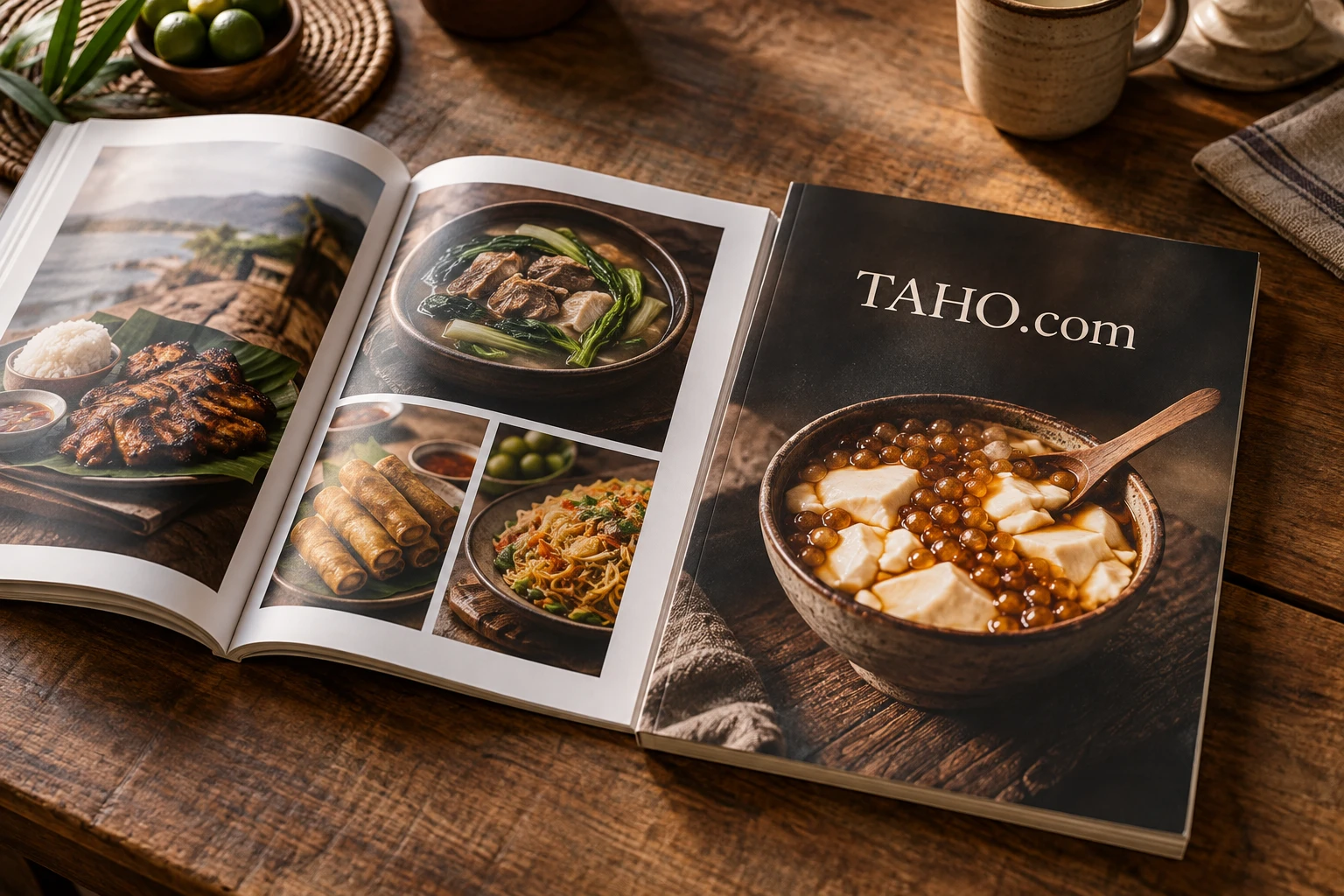
A useful food publication begins with people who have something specific to tell. A cook explaining a family variation, a shopkeeper describing an ingredient or a photographer documenting one neighborhood can give readers more than a broad list of dishes. This illustrative TAHO.com concept is an independent guide built around contributed stories and practical context.
The first reader could be a curious home cook who wants to understand an unfamiliar ingredient. Another could be a Filipino reader interested in how a contributor’s experience differs from their own. The publication should welcome both without claiming that one article represents an entire culture. Specificity would be part of the editorial identity: who is speaking, where the story takes place and what the writer knows firsthand.
Give the first issue a small subject
An opening issue might focus on breakfast in three households or on the working day of a single food market. Choose a subject the editor can report with the time and contributors available. A narrow issue can still contain a range of formats: an interview, a photo essay, a short ingredient explainer and a recipe developed by an identified cook.
For example, an issue about a neighborhood breakfast counter could follow one morning from preparation to closing. A conversation with the operator might sit beside photographs of the workspace and a glossary of words used in the interview. Each piece would answer a different question. The photograph shows the place; the interview carries the person’s account; the glossary helps a newcomer follow along.
Mark the limits of each story. A family practice can be described as that family’s practice. A contributor’s memory can be presented as a memory. Claims about wider history need research beyond the interview. This distinction makes the publication more useful because readers can tell what kind of knowledge they are being offered.
Build an archive readers can actually use
The website could organize stories along two simple paths: what a reader wants to do and what a story is about. “Cook,” “Meet” and “Visit” might serve as action categories, while ingredient, place and contributor tags offer another route. Test a few sample stories against the structure before inventing a long taxonomy.
A recipe and an interview about the same ingredient should connect, but they should not have to share an identical format. Give recipe readers practical information near the top. Give interview readers a clear introduction to the speaker. A photo essay may need a short orientation and carefully written captions rather than a long introductory essay.
TAHO.com could provide the shared address for this editorial collection. The name would sit on the publication, while descriptive article titles do the work of explaining individual stories. Search and archive navigation should make it possible to return to a piece even if someone remembers the ingredient or contributor more clearly than the headline.
Treat contributors as collaborators
A first contributor brief should explain the intended story, audience, format, length and publication plan. Agree the scope before recording an interview or commissioning photographs. Clarify how names will appear, what material is being supplied and what review is appropriate. A friendly conversation still benefits from a clear written understanding.
The Library of Congress cultural documentation guidelines bring together resources on project planning, interviews, permissions and field notes. They are useful background for an editor building a documentation practice. They do not replace the publication’s own agreements or the care required in a particular community.
Keep a source record for each piece. Record the date, contributor’s preferred name, relevant place names, supplied files and any uncertainties that need checking. If a phrase has more than one translation, ask the contributor how it should be represented and explain the choice where useful. Avoid silently replacing a precise local word with a more familiar but different one.
Let the photographs carry real information
A food guide can use photographs to show technique, setting and people rather than decorating every page with a finished dish. An image of a tool in use may answer a question that a polished tabletop photograph cannot. Captions should identify what the reader is seeing and credit the maker of the image.
For online access, decide what each photograph contributes to the article and write its text alternative accordingly. The W3C images tutorial distinguishes informative, decorative and functional images. That distinction can help an editor avoid both empty descriptions and repetitive captions that repeat every nearby sentence.
Publish at a pace the team can maintain
A small first issue could travel through contributor networks, partner newsletters and relevant community organizations willing to share it. Ask for a specific introduction to the work rather than a generic endorsement. The message might explain who was interviewed and which question the issue answers. A publication should make sharing easy while respecting a partner’s choice about what suits its readers.
Before promising a schedule, map the work behind one issue: commissioning, reporting, checking, editing, permissions, images and publication. Leave room for contributors to respond. An achievable quarterly issue may provide a better foundation than a weekly promise that the team cannot support. The right cadence depends on the actual people and resources involved.
The next step is a one-page issue plan with four story proposals, named contributor roles and a clear reader question for each piece. Add a sample archive page to see how those stories would be found later. If you want to develop this direction, inquire about acquiring TAHO.com or describe a partnership proposal. This page offers a possible editorial starting point; no publication or contributor roster is being represented as already operating.

About Michael Santiago
Michael Santiago started i-Newswire.com in 2007, progressing to iNewswire.com and Newswire.com: a short, category-defining brand. The business sold to Issuer Direct for $44 million in 2022. He now develops premium domains and companies through OnlineBusiness.com.