Ideas · An illustrative concept
A Filipino pantry brand
A three-product collection with a clear place on the shelf and in the kitchen.
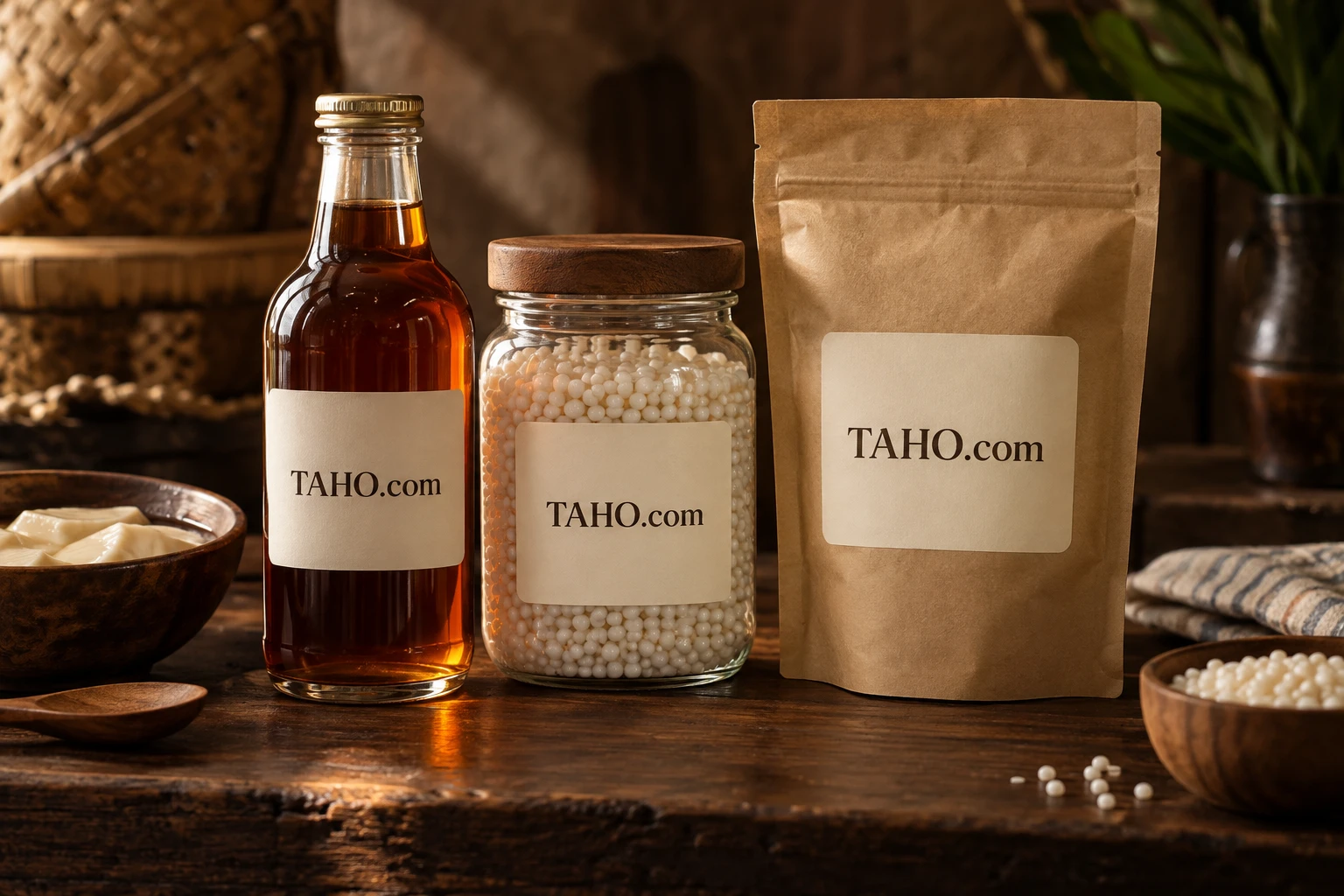
A pantry brand has to earn a place in a real kitchen. Attractive packaging may help someone notice a jar, but the product still needs a clear use, a sensible portion and a reason to be opened again. This illustrative TAHO.com concept starts with three complementary products and a single question: what could a customer make with this collection during an ordinary week?
The intended buyer might enjoy Filipino food, want to explore a few ingredients more confidently or be looking for a thoughtful food gift. Those are different shopping occasions. An opening collection should choose one as its main job. A gift set can tolerate a longer explanation and more packaging; a repeat pantry purchase needs clear individual product information and an easy way to reorder.
Define the collection before the labels
For a working concept, imagine a syrup, a spread and a dry topping. These are product roles, not validated formulations. The development team would decide what each contains, how it is made, how it is stored and whether the three belong together. Their common thread could be a shared serving occasion rather than identical flavors.
Give each proposed product a one-sentence job. The syrup might finish a dessert, the spread might belong at breakfast and the topping might add texture to a bowl. Then write two concrete serving suggestions for each. If the team struggles to explain when a product would be used, it may need more development before it earns a place in the collection.
Avoid choosing three products only because three containers look pleasing in a photograph. Different packaging formats can create different sourcing and fulfillment needs. A founder should compare the work behind each item: development, ingredients, containers, packing, storage, shipping and customer questions. The first assortment ought to match the team’s ability to make and support it.
Make the shelf easy to read
TAHO.com could act as the collection’s central name and online destination. The front of each pack would still need a distinct product name. A shopper should be able to separate the brand from the contents. Keep the product words prominent enough that someone can tell the jars apart without lifting every one off the shelf.
Use a repeated layout with one useful variable. For example, the location of the product name, quantity and serving suggestion could stay consistent while a color panel distinguishes each item. Print rough labels at actual size and attach them to sample containers. A design that looks balanced on a large screen may become difficult to read on a curved jar.
Photography should show the proposed contents as well as the packaging. One collection image can establish the family, while an individual image explains texture and portion. On a future product page, provide the important details as readable page text. The W3C guidance on images of text explains why ordinary text is generally preferable to embedding all the information in a picture.
Give the customer one manageable first purchase
The opening offer could be a small discovery set with a card explaining one way to use each item. Keep those serving suggestions achievable with familiar kitchen equipment. A card that requires several additional purchases may turn a friendly introduction into a project. The aim is to help a customer open the products, try them and learn which one belongs in a repeat order.
The collection would also need a clear route to individual replenishment. Someone who enjoys the spread should not have to buy another complete gift box to replace it. Sketch both journeys before deciding on the packaging system: the first set bought as an introduction, and the single item purchased again a month later.
An actual food brand would need product testing and specialist review for its manufacturing, labeling, storage and distribution arrangements. The visual examples here do not establish shelf life, ingredient suitability or regulatory compliance. Those are decisions for the operating team and qualified advisers in the markets where the products would be sold.
Start distribution with useful conversations
One possible initial route is a small group of independent food retailers that already serve the intended customer. Prepare a concise product sheet with the proposed assortment, pack sizes, ordering process and contact details. A retailer should be able to understand the collection without sitting through a broad brand presentation.
Ask specific questions about the shelf. Where would the collection sit? Would customers look for it beside breakfast products, dessert ingredients or gifts? Which item seems easiest to explain? Record disagreements rather than smoothing them into one vague answer. If every retailer places the product in a different category, the founder may need to sharpen the proposition.
Direct sales could support that retail work with product explanations and serving photographs. The website would have a practical role: showing what is inside, how the items differ and where someone can buy them. It should reflect the actual distribution setup once established, with availability and delivery information maintained by the operator.
Build a three-product decision sheet
Before commissioning finished artwork, write one page for each proposed item. Include its customer, use occasion, development questions, container idea, serving suggestion and likely purchase route. Place the pages side by side and look for duplication. Three versions of the same job may be less useful than a smaller, better explained collection.
Finish with a collection page that explains why these particular items belong together. That document can guide discussions with food developers, packaging suppliers and potential retailers. It will also make a domain inquiry more concrete. If this direction fits your plans, inquire about TAHO.com with a short description of the products and the team behind the proposal. The domain is available for acquisition; the imagined pantry business would be yours to develop.

About Michael Santiago
Michael Santiago started i-Newswire.com in 2007, progressing to iNewswire.com and Newswire.com: a short, category-defining brand. The business sold to Issuer Direct for $44 million in 2022. He now develops premium domains and companies through OnlineBusiness.com.